The Third View Project

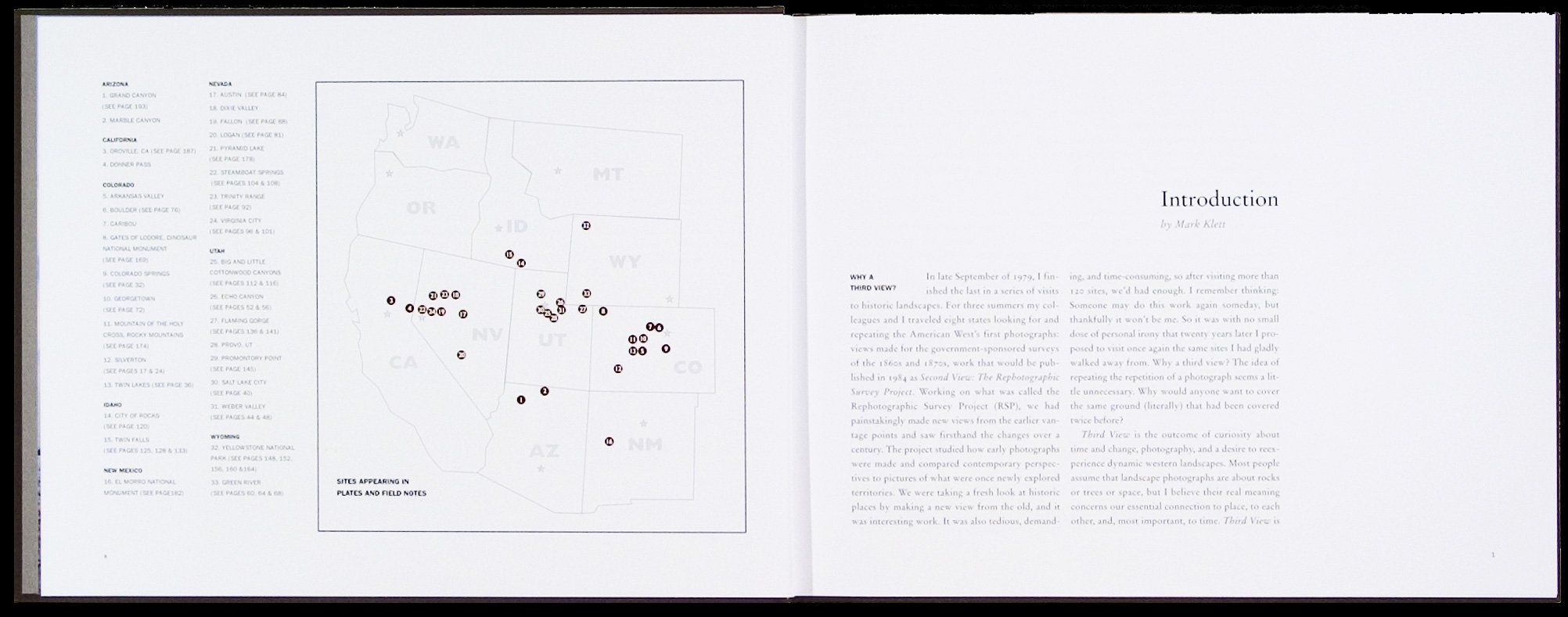
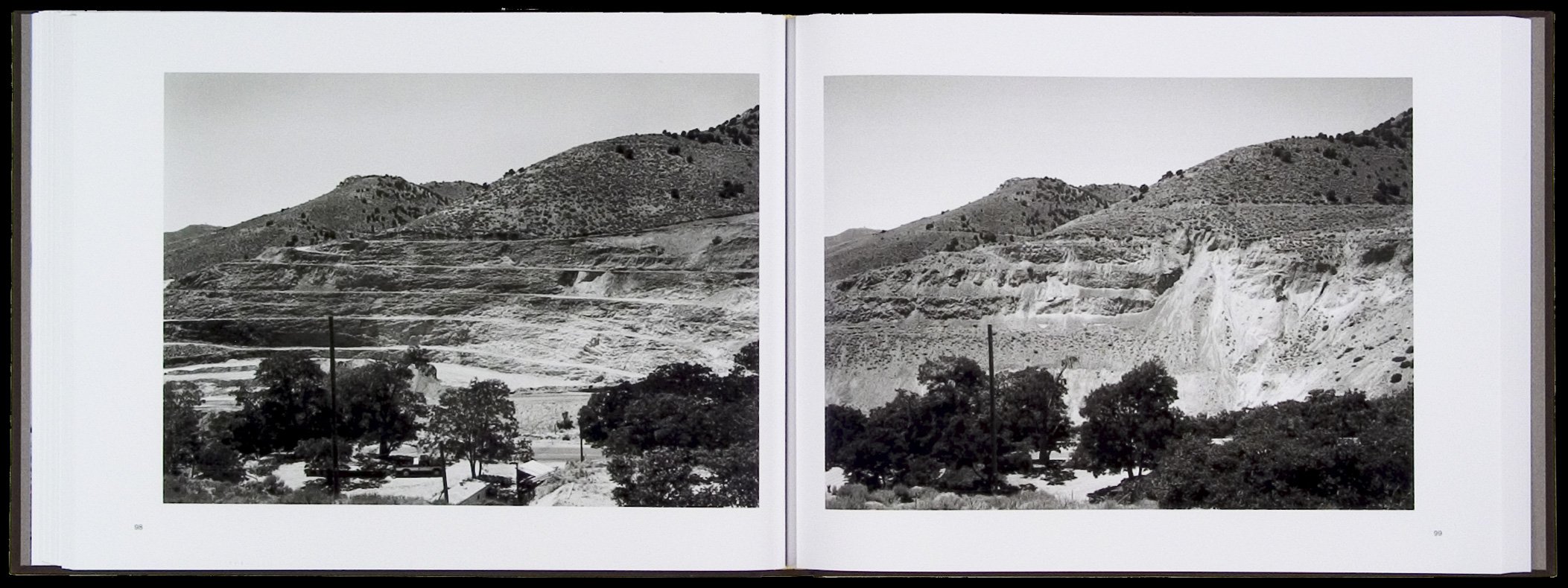
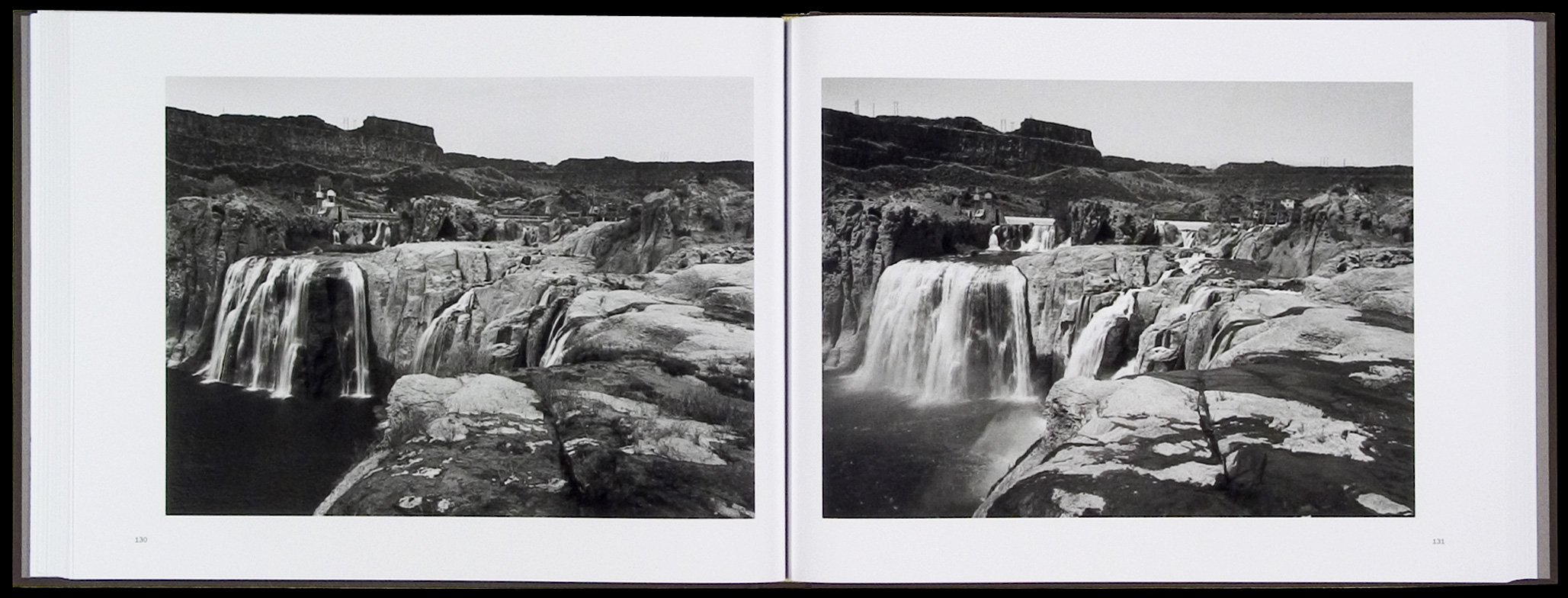
Third View began exactly twenty years after the Rephotographic Survey Project. Between 1997 and 2000 its field team used the same methods to return to the same places, producing a sequence of three views at most sites: the original survey photograph of the 1860s or ’70s, the RSP’s rephotograph of the late 1970s, and Third View’s own. In all, the project revisited 109 sites in Arizona, California, Colorado, Idaho, Nevada, New Mexico, Utah, and Wyoming. Where the RSP had worked chiefly from government sponsored surveys, Third View widened the roster of original photographers to include William Bell and Carleton Watkins, adding roughly two dozen sites that had not been rephotographed before.
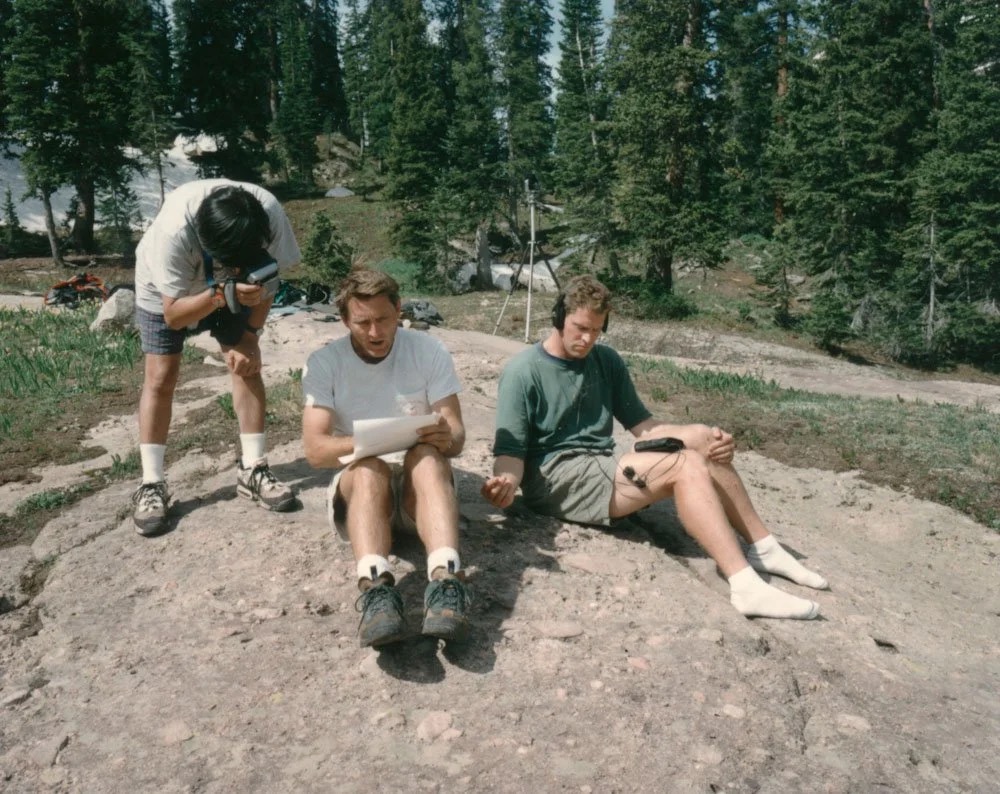
Toshi videotaping, Mark taking notes, Byron recording sound at Geneva Lake, Colorado 1997
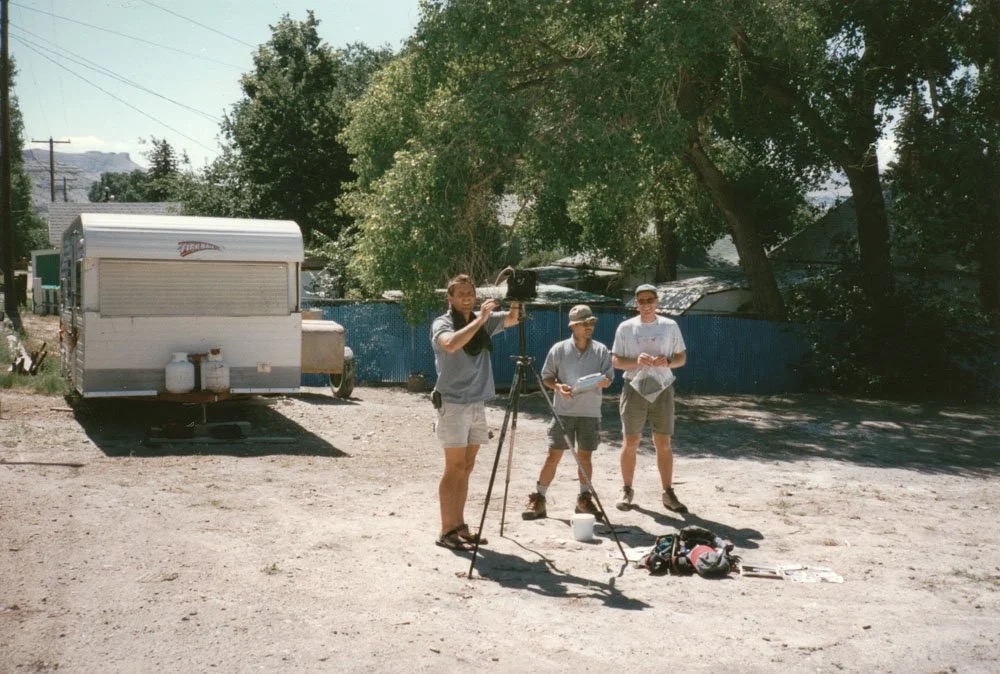
Mark, Toshi, Byron on site, Green River, Wyoming 1997

The field team was led by Mark Klett and drew its members from his graduate students at Arizona State University. Byron Wolfe, Kyle Bajakian, and Toshi Ueshina began in the first season, Michael Marshall started in the second. The writer William L. Fox also joined the team in the second year.

Third View was published in 2004 as the book Third Views, Second Sights: A Rephotographic Survey of the American West (Museum of New Mexico Press). Included with the book was an interactive DVD, which was the project’s central form. That interactive work is preserved and accessible in its entirety online at thirdviewdvd.org.
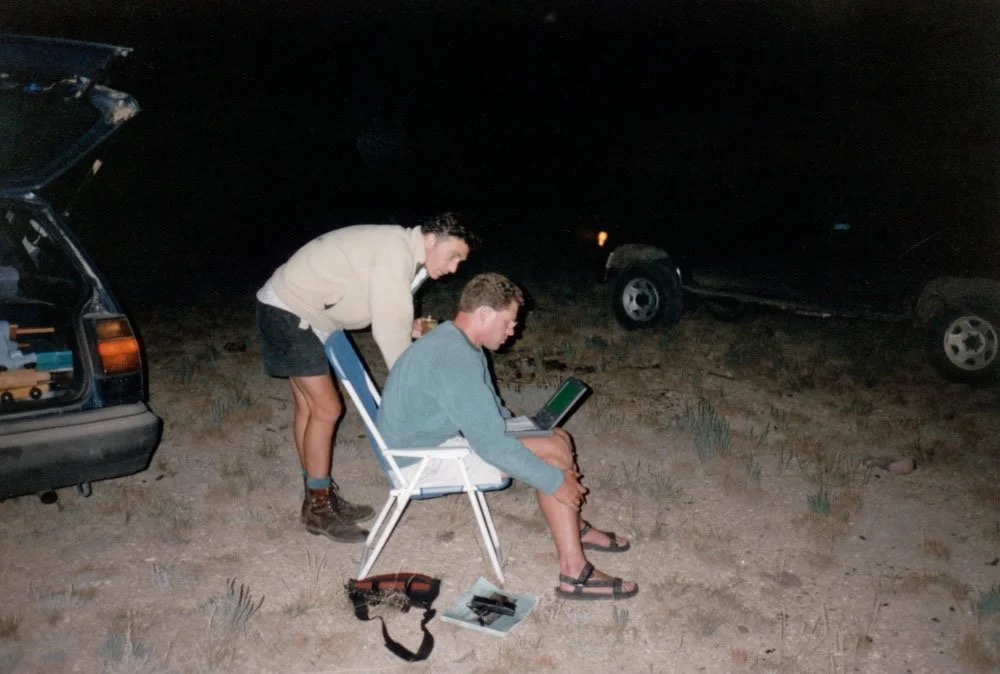
Kyle and Byron checking images on laptop, Wyoming 1997
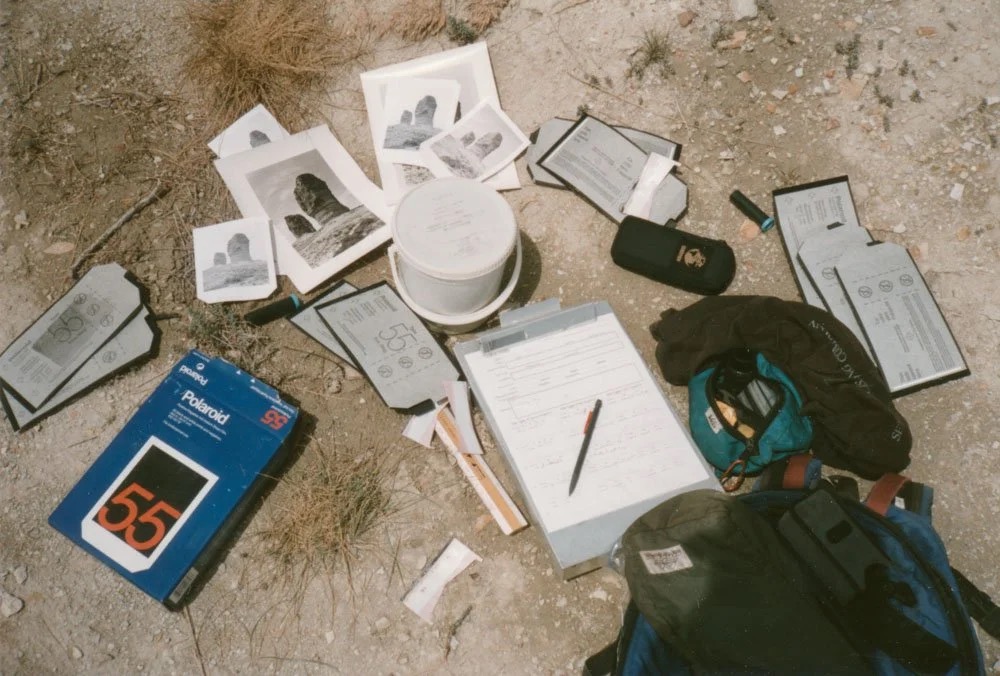
Polaroid film and bucket for clearing negatives, Green River, Wyoming 1997

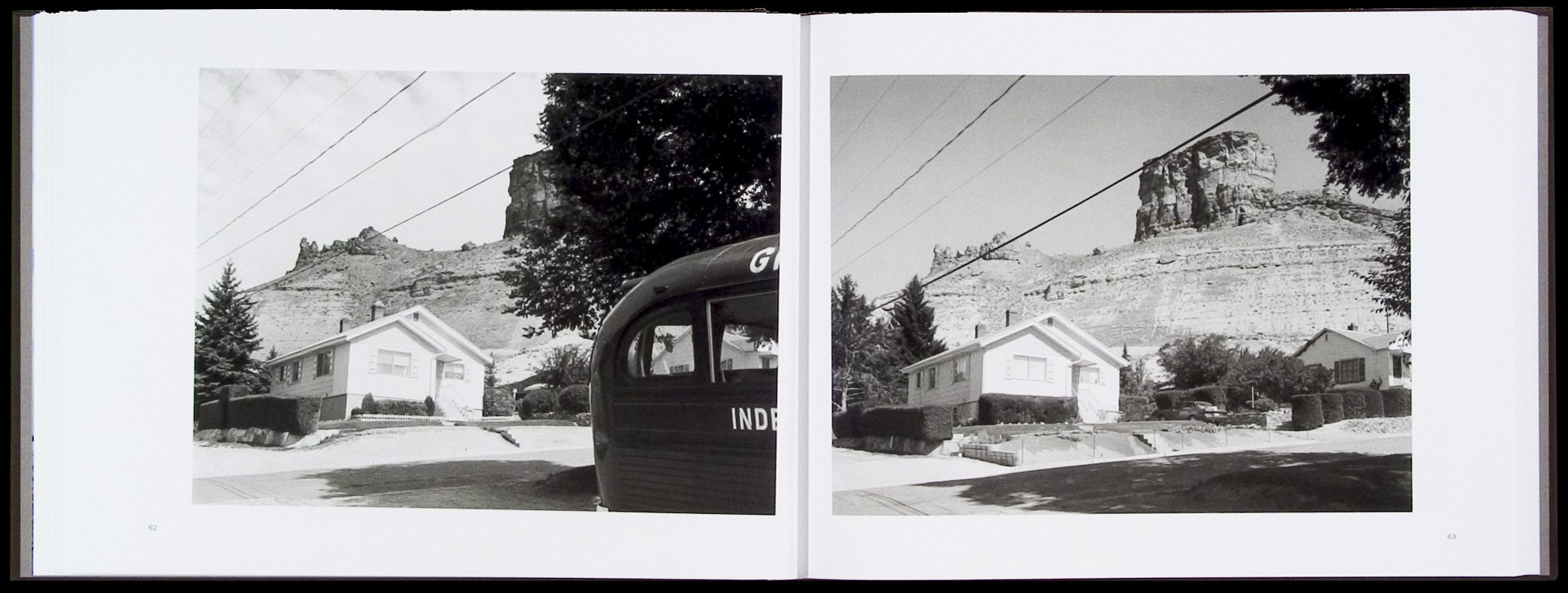
Where the RSP distilled each site to a diptych, Third View’s additional frame implies that it is part of an ongoing time-lapse sequence. The team also wanted to know what was happening outside the borders of the views. They recorded oral history interviews and ambient sound, shot video, kept field notes, collected artifacts and found objects, made their own photographs, and produced site imagery including 360° panoramas and animations. The goal was to record and explore the circumstances and experiences that produced the initial photographs and the subsequent rephotographs.

This additive approach was the logical extension of what the RSP had begun. Third View was intentionally working against conventions in landscape photography that were by then more than a century old: a single authoritative vantage point, a photograph that stands alone and complete, a lone photographer whose choices disappear behind the frame. Third View’s model was the nineteenth-century survey itself, operating with a traveling crew, a wide range of instruments and sensibilities, and evidence assembled over multiple seasons.
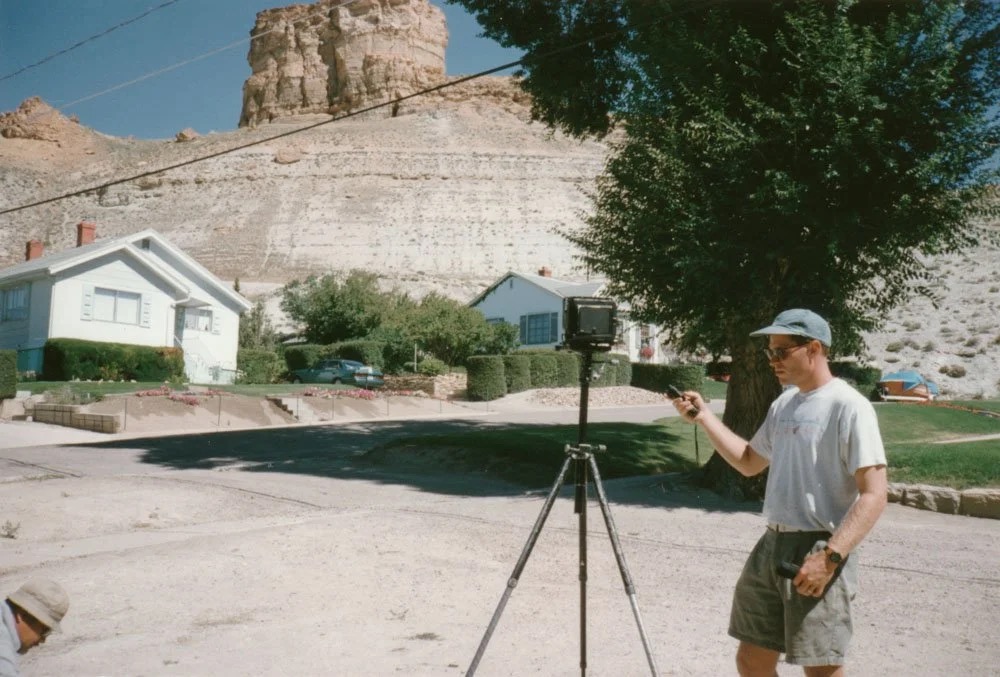
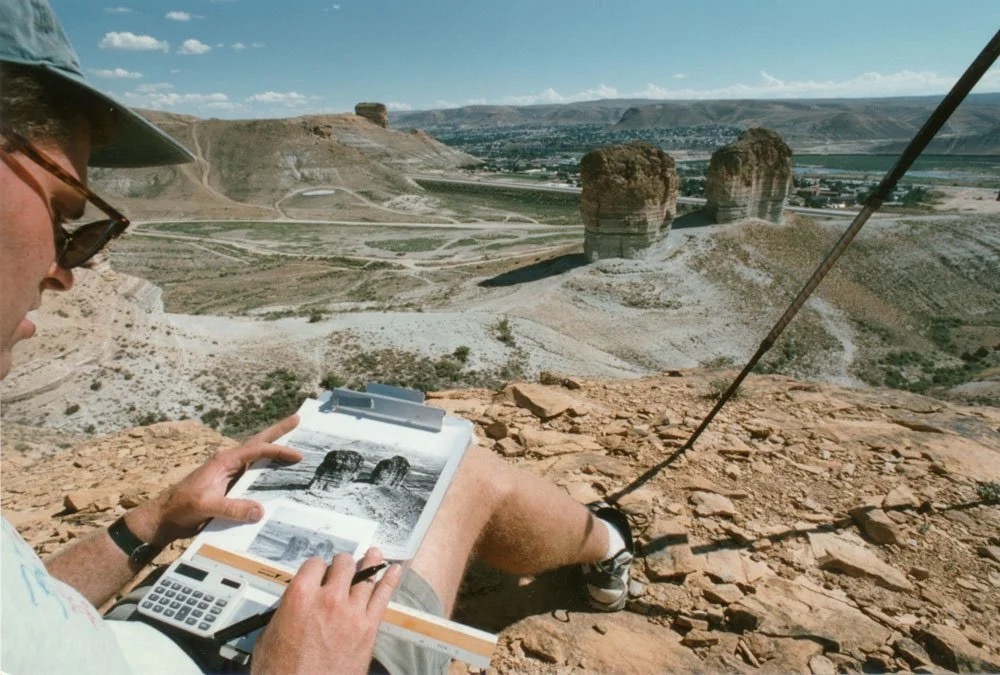
Byron on site at Green River, Wyoming 1997
Byron checking the measurements for repeating O’Sullivan’s view of “Teapot Rock and the Sugar bowl” Green River, Wyoming 1998

The project used emerging technologies to invent new ways of exploring each site. Working with the interactive media of the late 1990s, the team organized the material two ways at once: an indexed and searchable archive alongside an experiential journey following the field team’s travels. It developed a range of visualization tools, among them the “Time Reveal Window,” a way of looking through layers of time, the “embedded panorama,” which anchored historic photographs within an expansive view of a site, and “animated walk-arounds” that explored the territory surrounding the original view.

From the interactive DVD, 2004Screen recordings — silent, looping
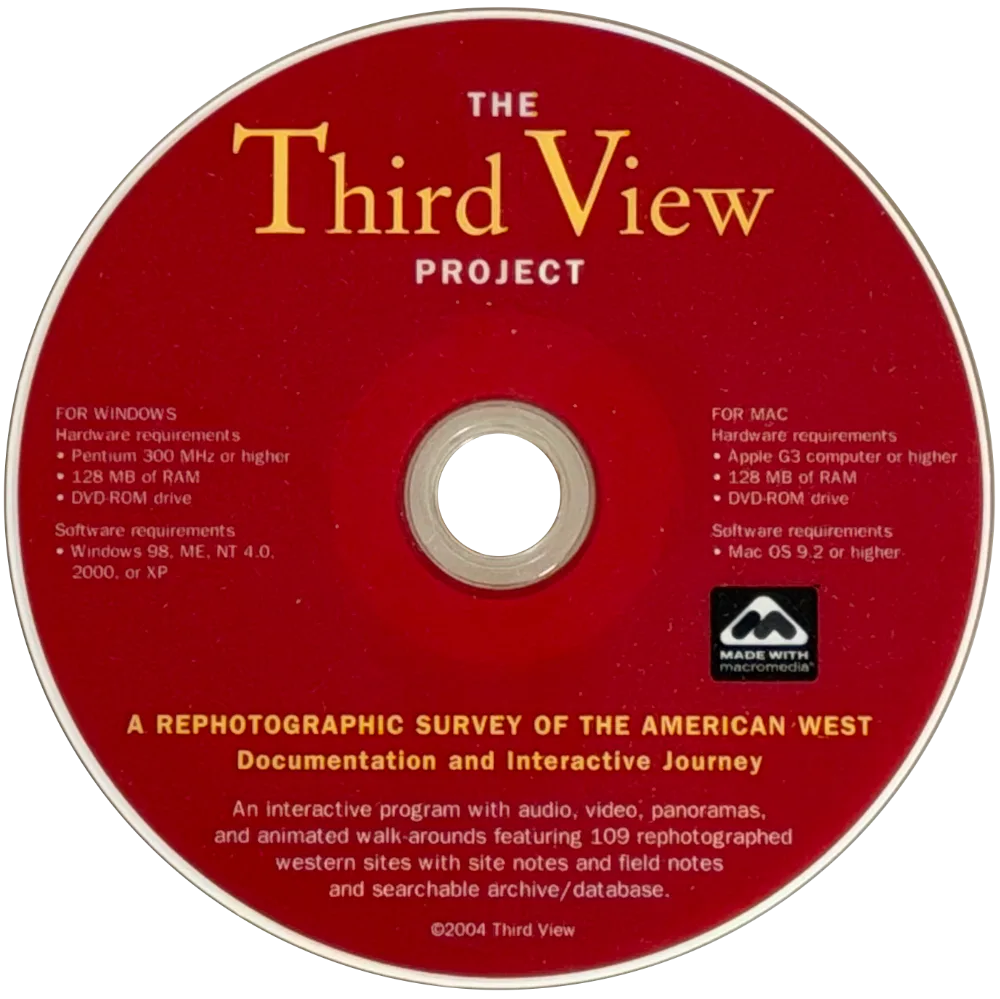
The Third View Project DVD, 2004: a dark red disc reading “The Third View Project — A Rephotographic Survey of the American West, Documentation and Interactive Journey”
The Third View Project DVD, 2004. An interactive program of audio, video, panoramas and animated walk-arounds covering 109 rephotographed sites, with site notes, field notes and a searchable archive. It now runs in a browser at thirdviewdvd.org.
The “Time Reveal Window” moving between the three views of Austin, Nevada. Open Austin on the DVD.
An “animated walk-around” of Teapot Rock and the Sugar Bowl, Green River, Wyoming. Mark Klett and Byron Wolfe, 1997. Open Green River on the DVD.
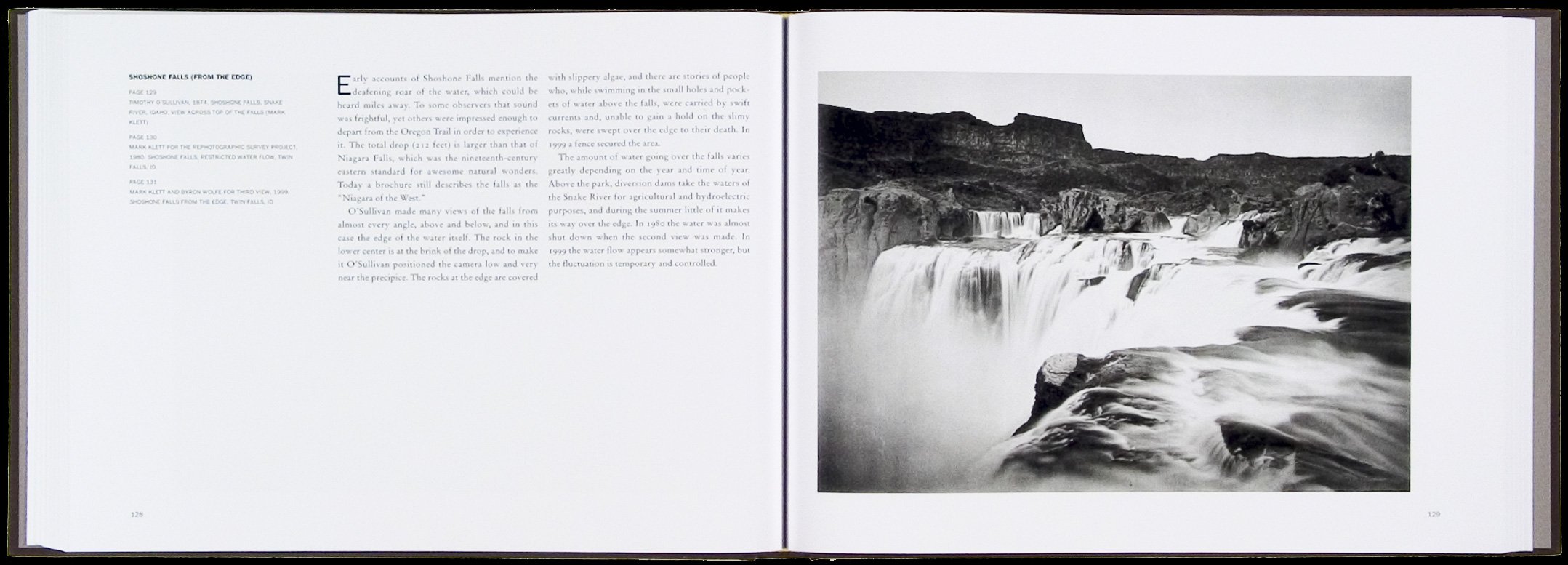
An “embedded panorama” — O’Sullivan’s Shoshone Falls anchored inside the wider view. Byron Wolfe and Mark Klett, 1999. Open Shoshone Falls on the DVD.
The Interactive Journey, travelling the field team’s route site by site through photographs, comparisons, and site notes. Start the Journey.
The DVD opening screen showing the searchable Archive and the Interactive Journey. Open the DVD.

The book, 2004Photographs of the printed spreads
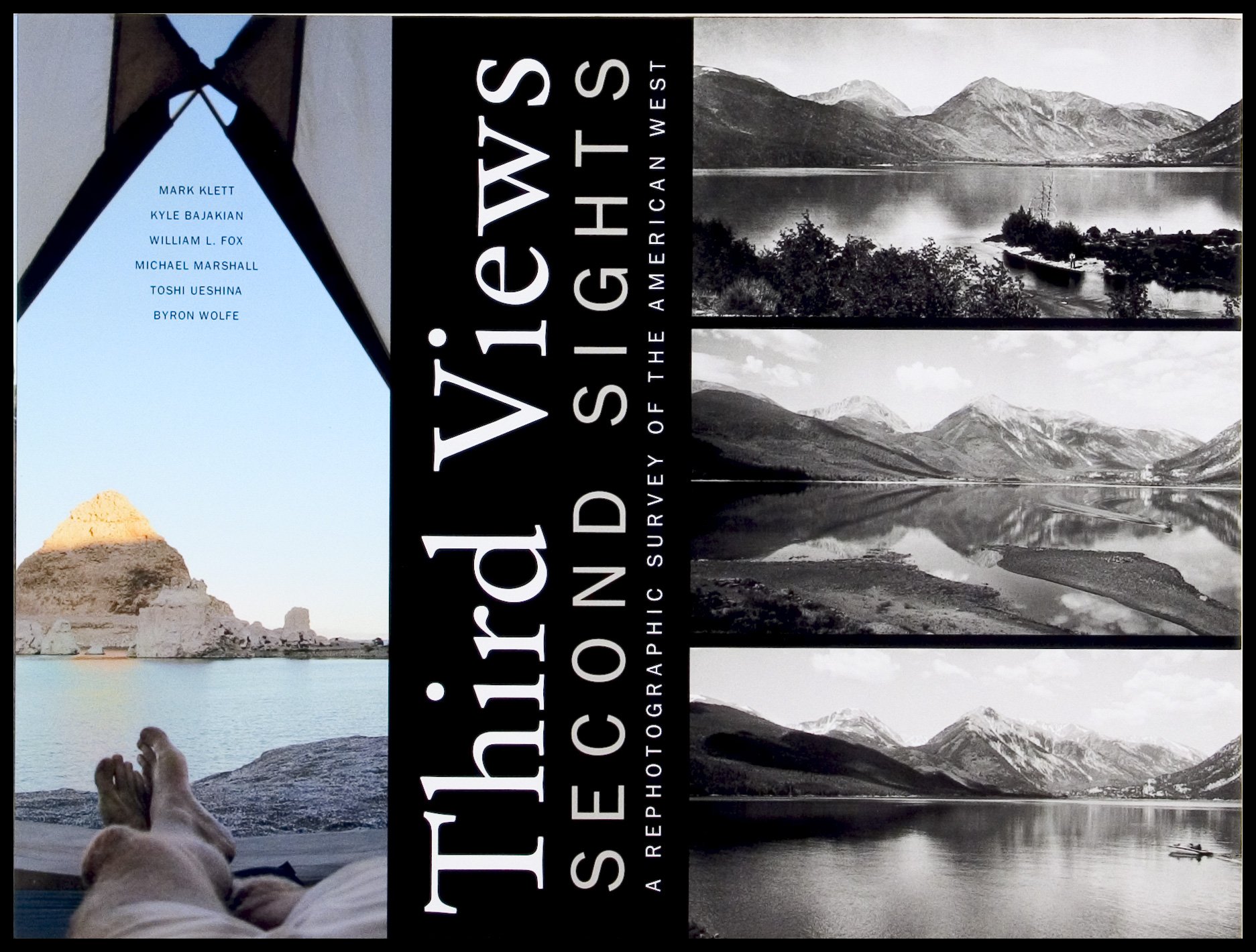
The cover of Third Views, Second Sights, with the Third View DVD behind it
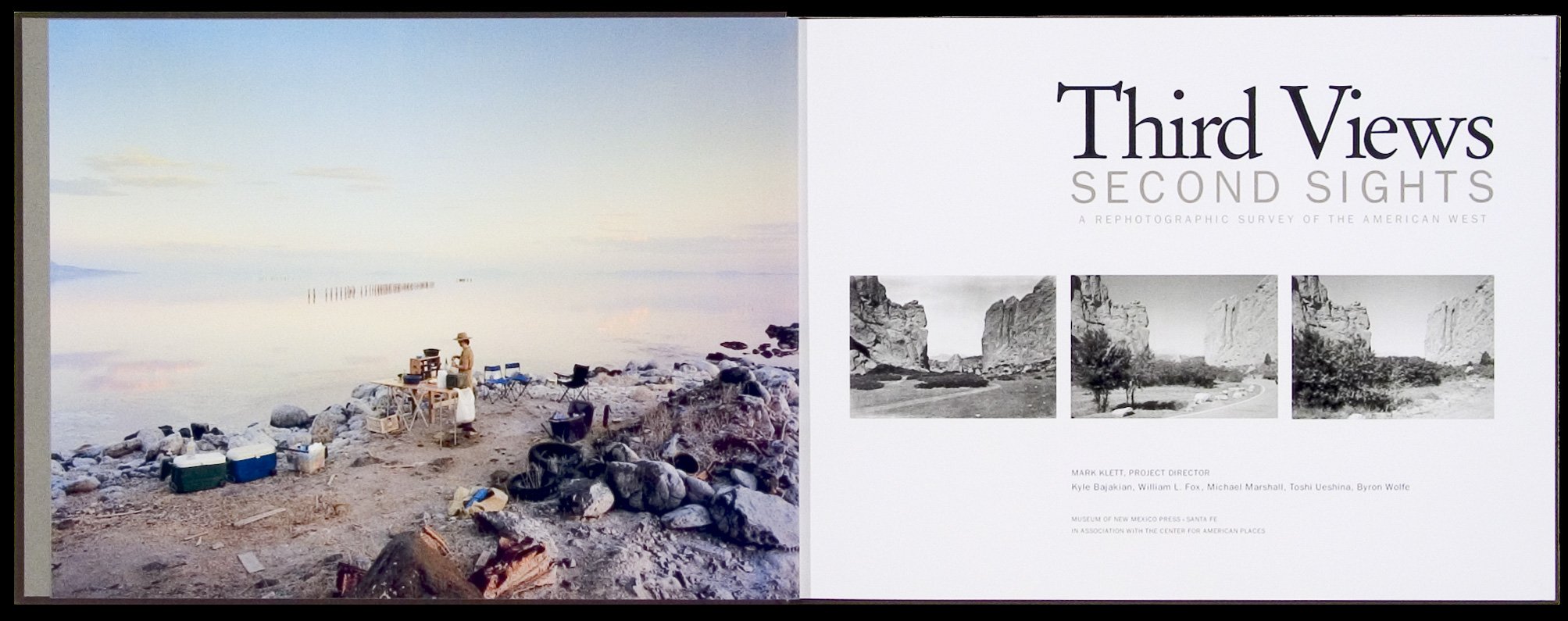
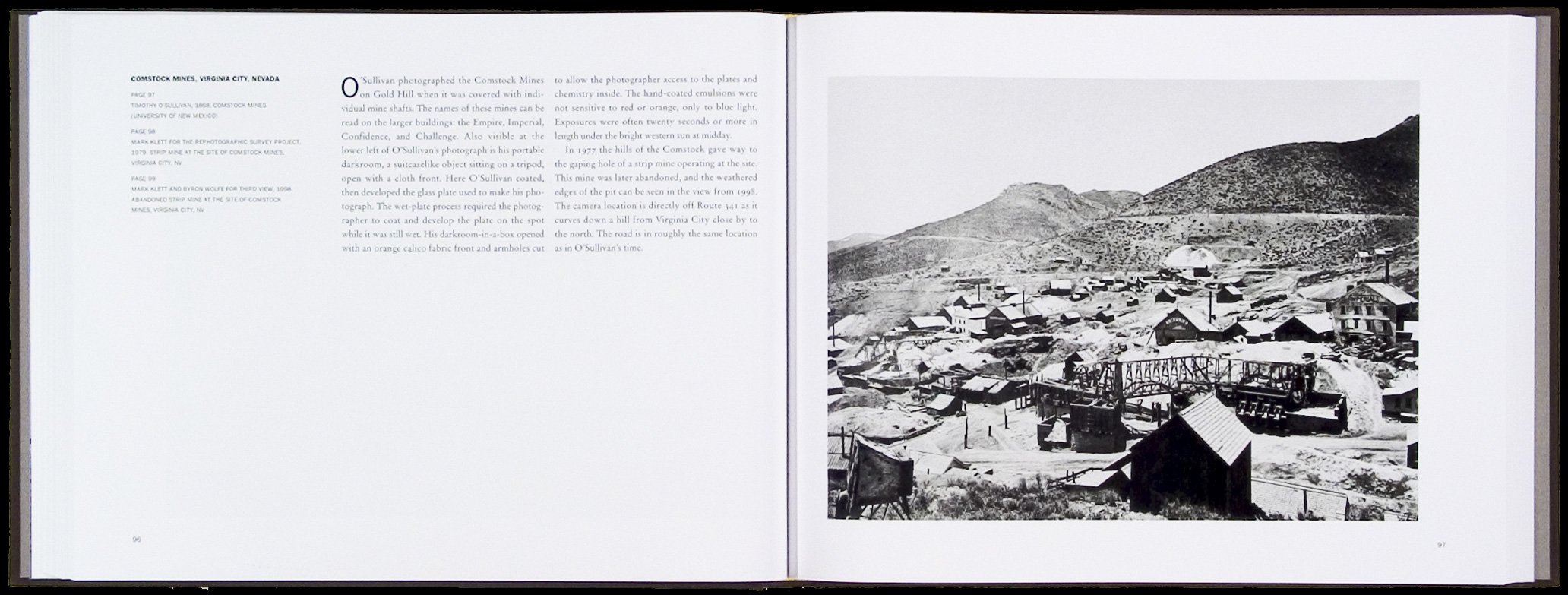
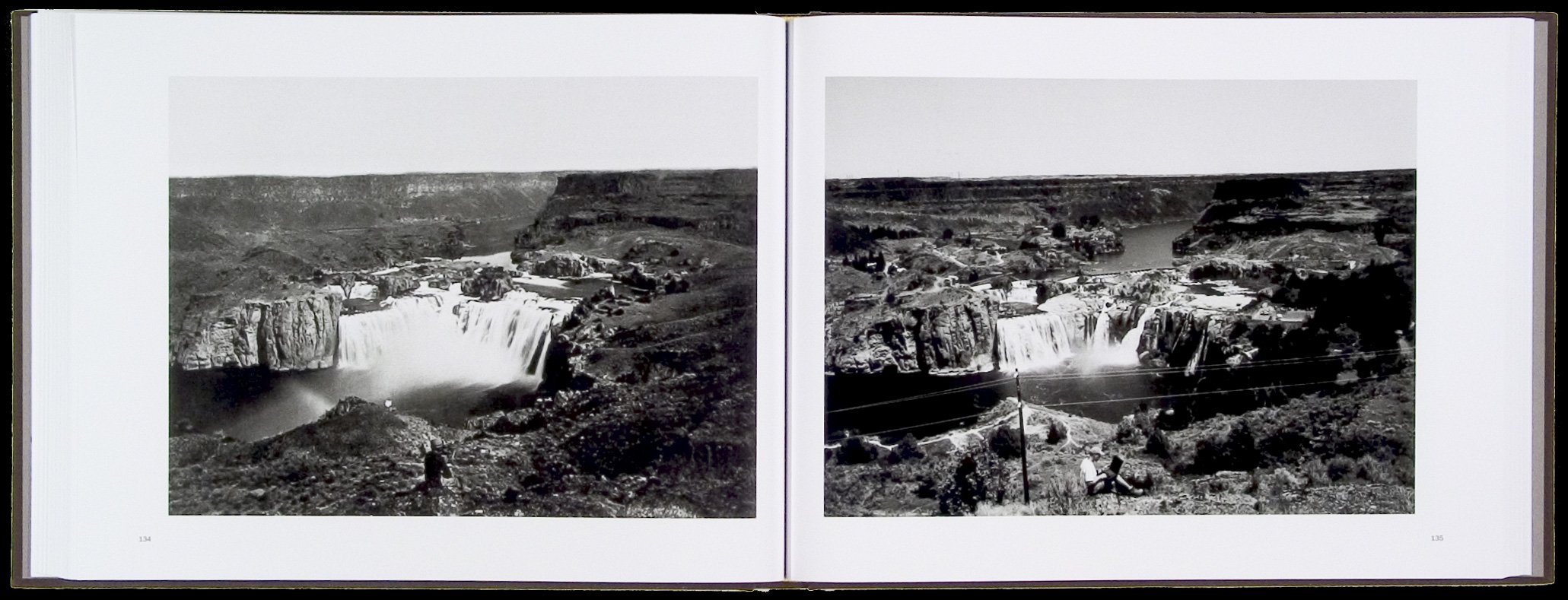
Title spread: Third Views, Second Sights
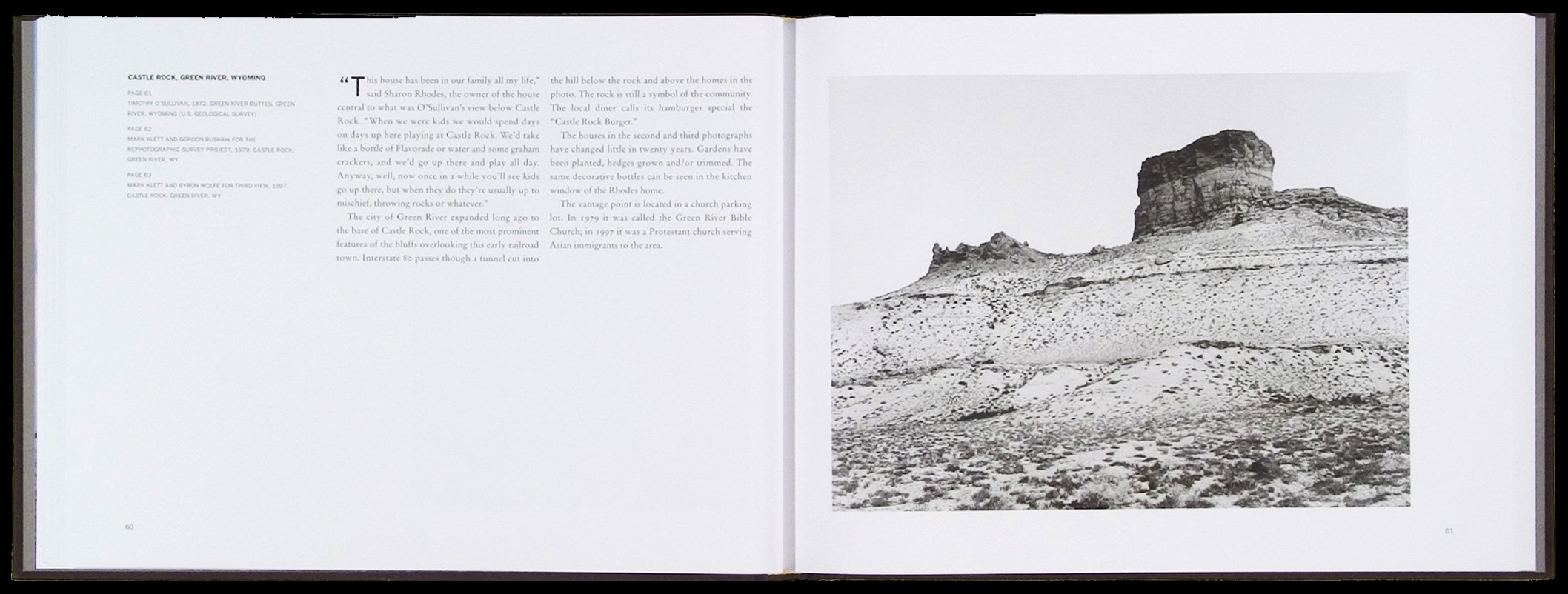
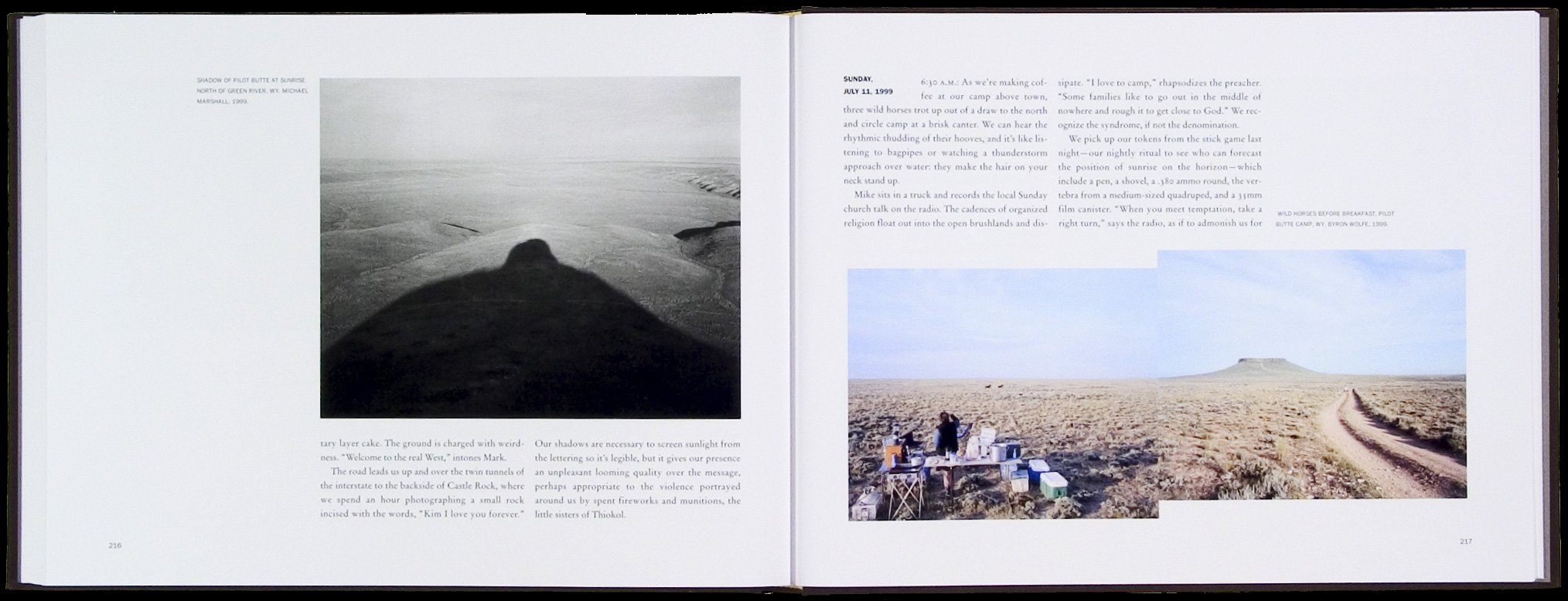
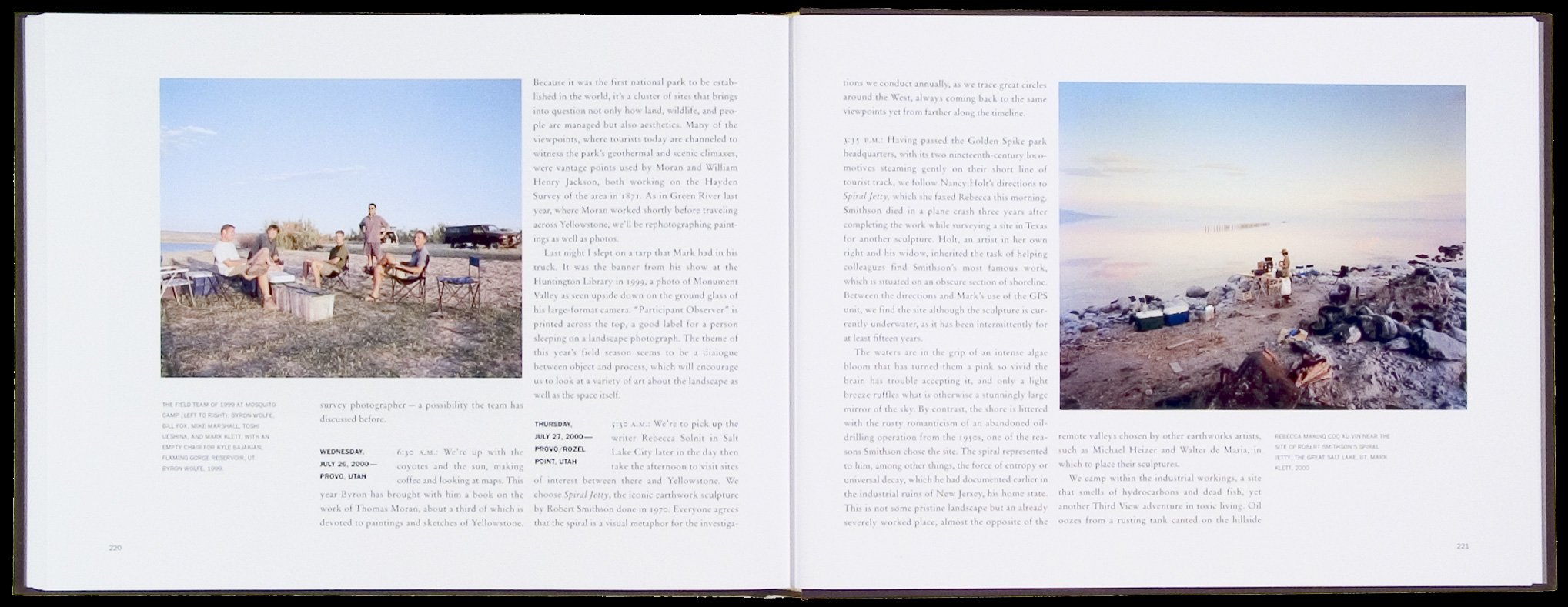
A spread from Third Views, Second Sights
1 / 12
Third Views, Second Sights: A Rephotographic Survey of the American West, Museum of New Mexico Press, Santa Fe, 2004. Forty-three photographs from the third survey, each paired with the original nineteenth-century survey photograph and the rephotograph made in the 1970s. Contributing writers and artists: William L. Fox, Mark Klett, Kyle Bajakian, Michael Marshall, Toshi Ueshina and Byron Wolfe.

In the field, 1997–1998Photographs by the Third View Project
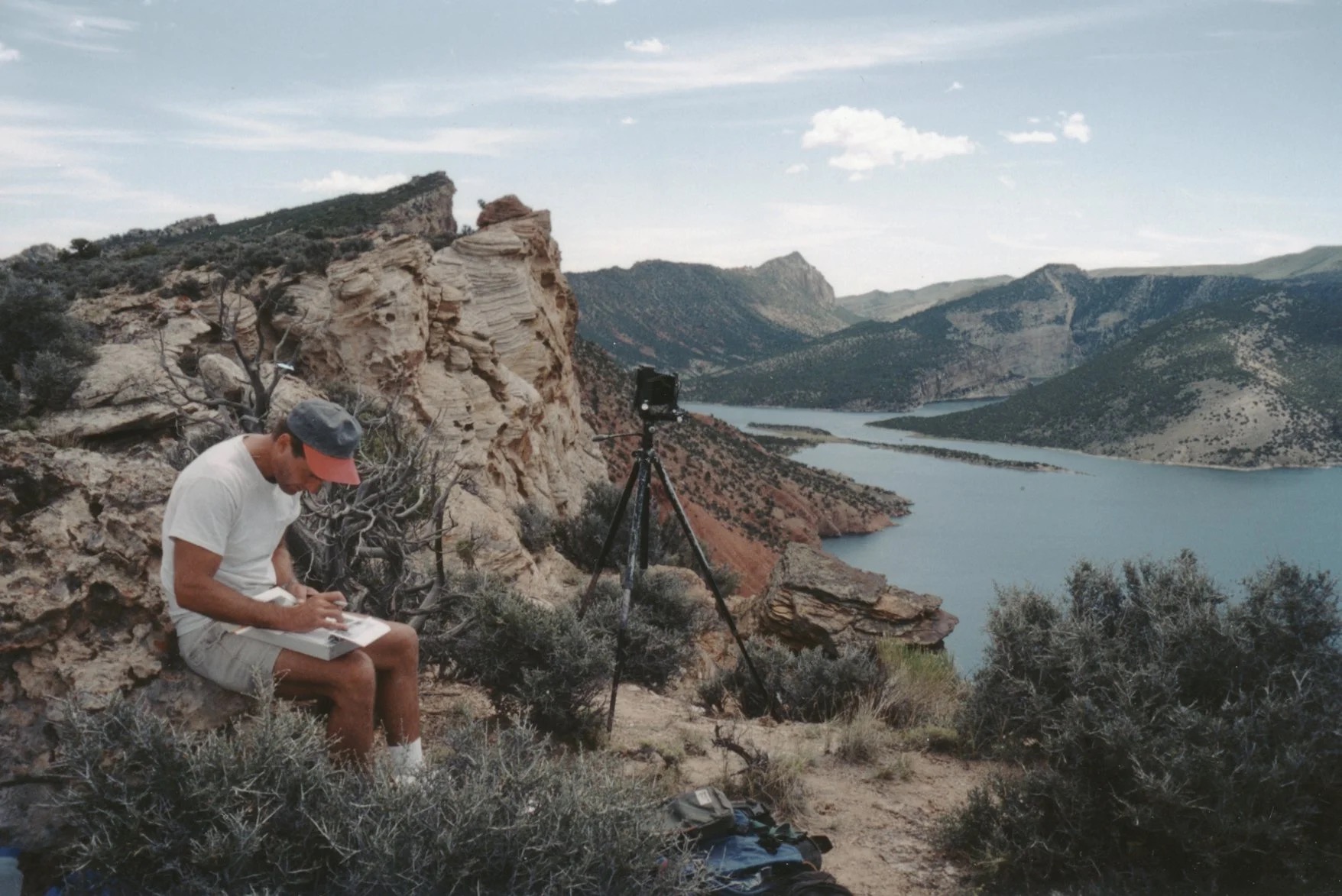
Mark recording data at O’Sullivan’s vantage point above the Green River, now reservoir, Wyoming 1998
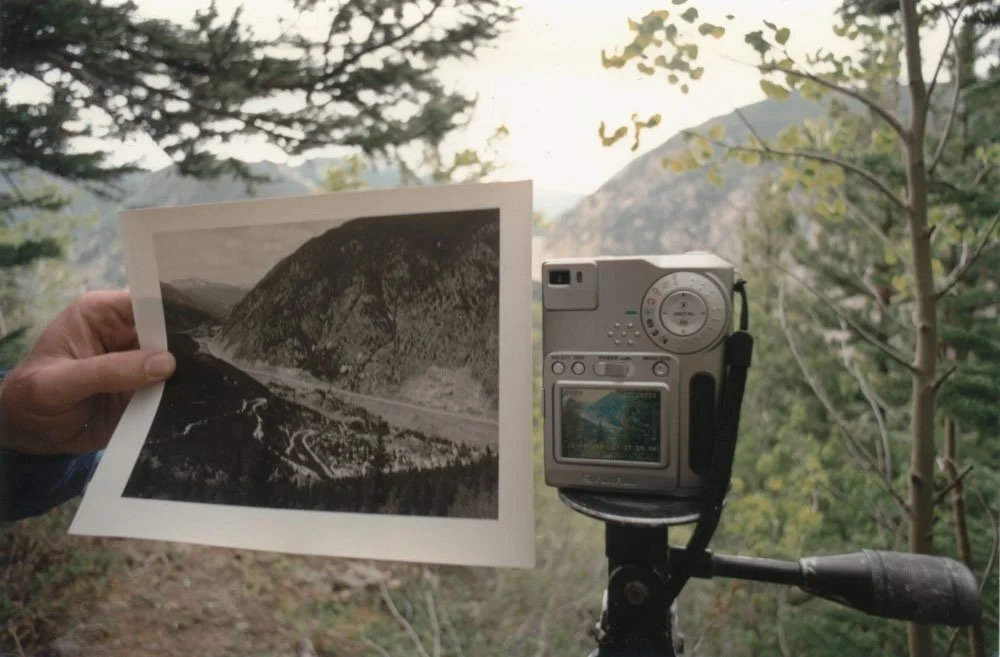
First digital camera, 1.5 megapixel, comparing digital image to copy print, Georgetown Colorado 1998
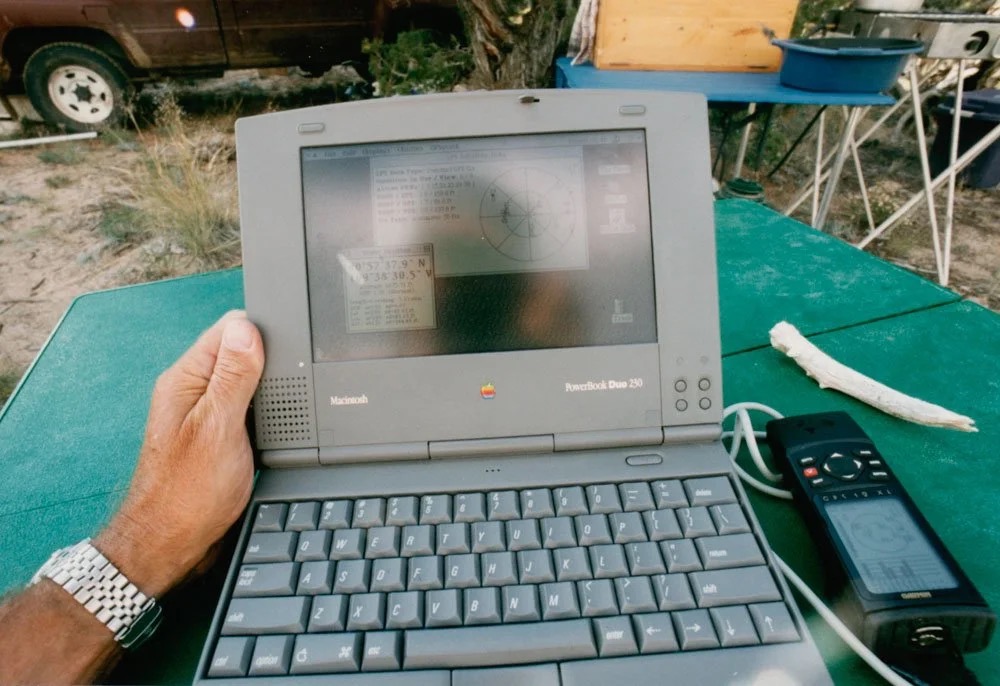
Byron’s MacIntosh PowerBook Duo and GPS unit, Wyoming 1997
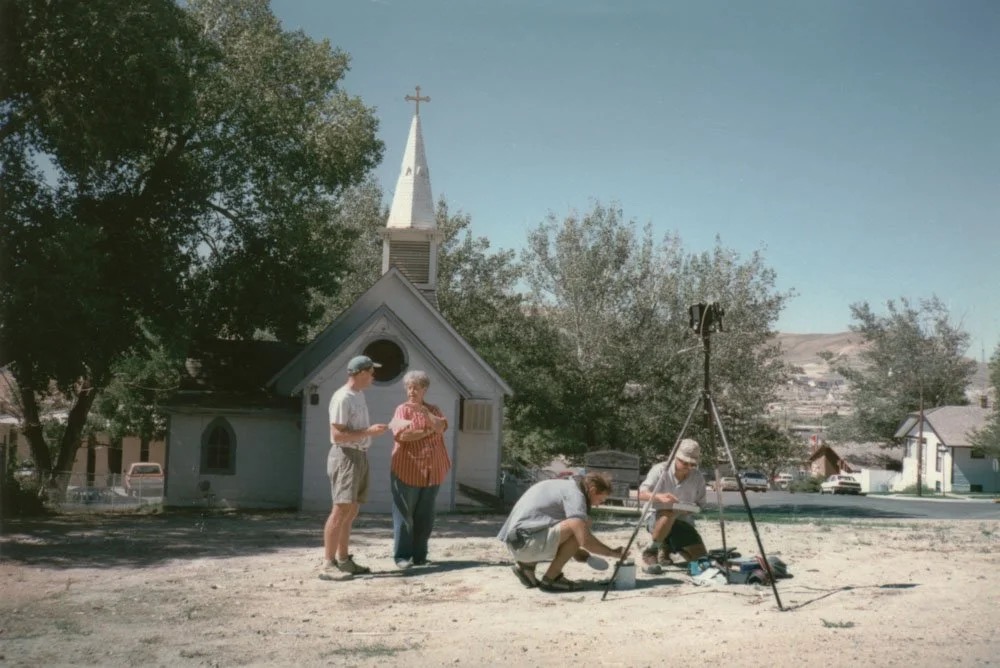
Byron talking to homeowner, Mark and Toshi on site in Green River, Wyoming 1997
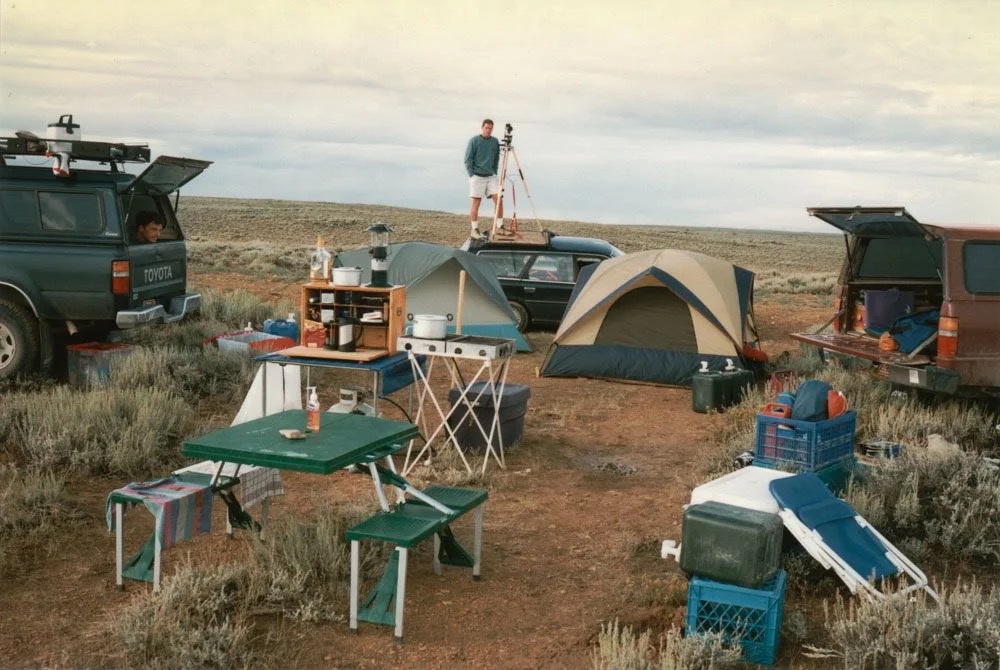
Byron surveying camp above Green River, Wyoming 1998
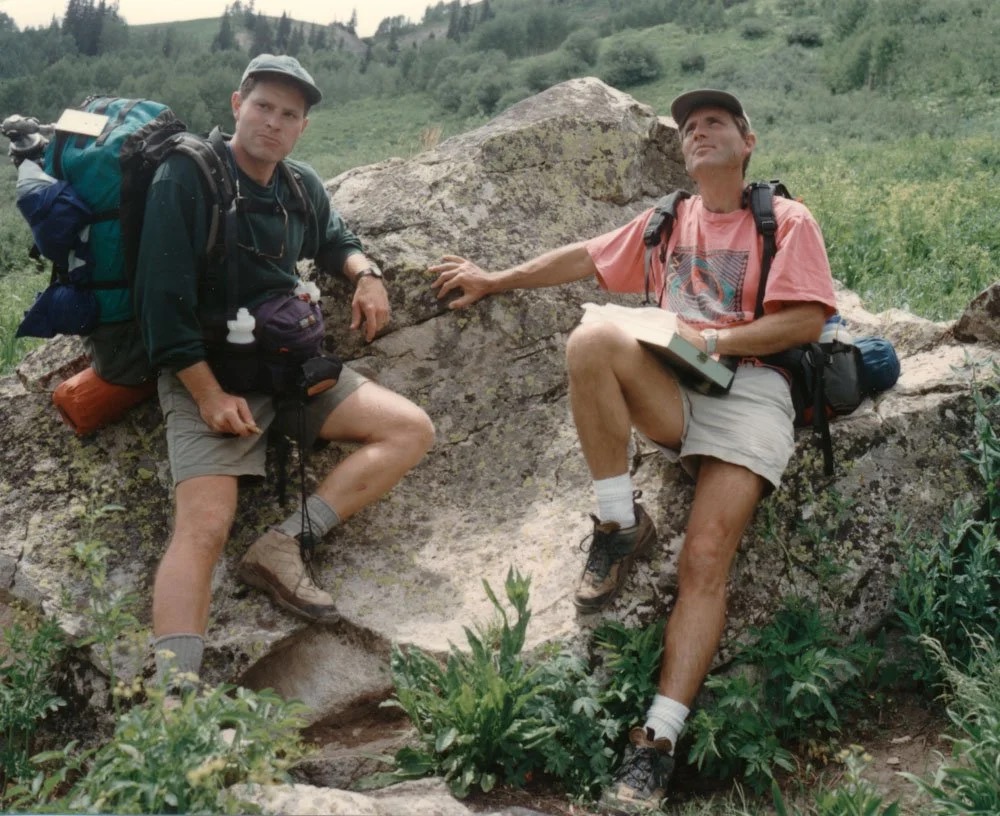
Byron and Mark resting on the hike to Geneva Lake, Colorado 1997

Third View set out to put viewers inside the experience of a place rather than at a distance from it — to survey not only changing landscape, but landscape as an idea, shaped by culture, technology, personal experience, and photography. What the project sought to explore was an evolving West of the imagination.